The terror of being shot, without the pain.
The question started somewhere uncomfortable. Shooting people is fun, at least in games, but the real thing inflicts pain and terror on another person. We wanted to know if you could keep the thrill and leave the harm behind. How do you get the terror, without the pain?
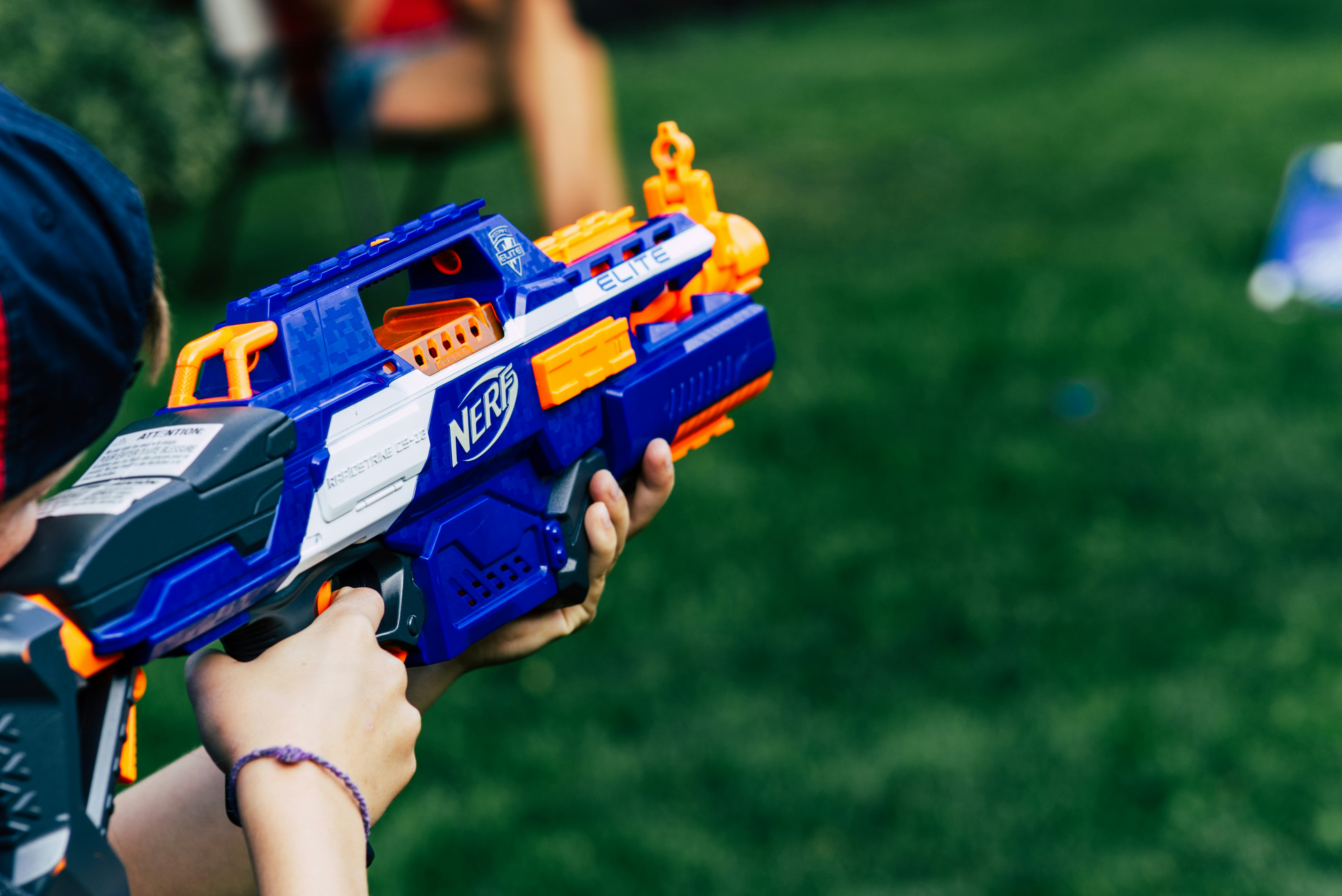
We knew shooting was fun. We could not say why.
The early prototypes leaned into features as a way of finding out. An air pump replaced the trigger to add haptic resistance. Pneumatics, shield deflectors, and fishing reels all entered the process at different points, each one meant to add another layer of interaction. We felt like a toy company slapping features onto toys.
.jpg)
.jpg)
.jpg)
.jpg)
Most of these features created more problems than they solved
User tests kept pointing back to the same thing, which was that the additions were getting in the way of the feeling we were trying to amplify. At some point it became clearer to remove than to add. The features that did not serve the moment of impact were cut, one after another, until what remained was a much smaller system that did less but landed harder.
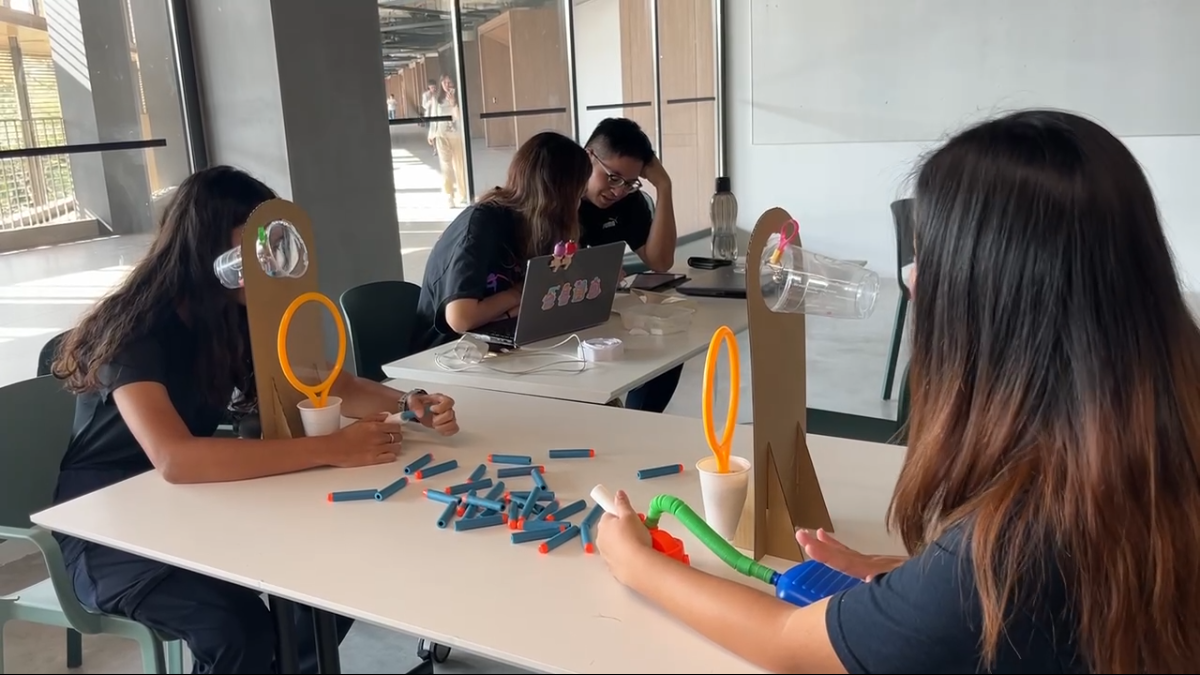
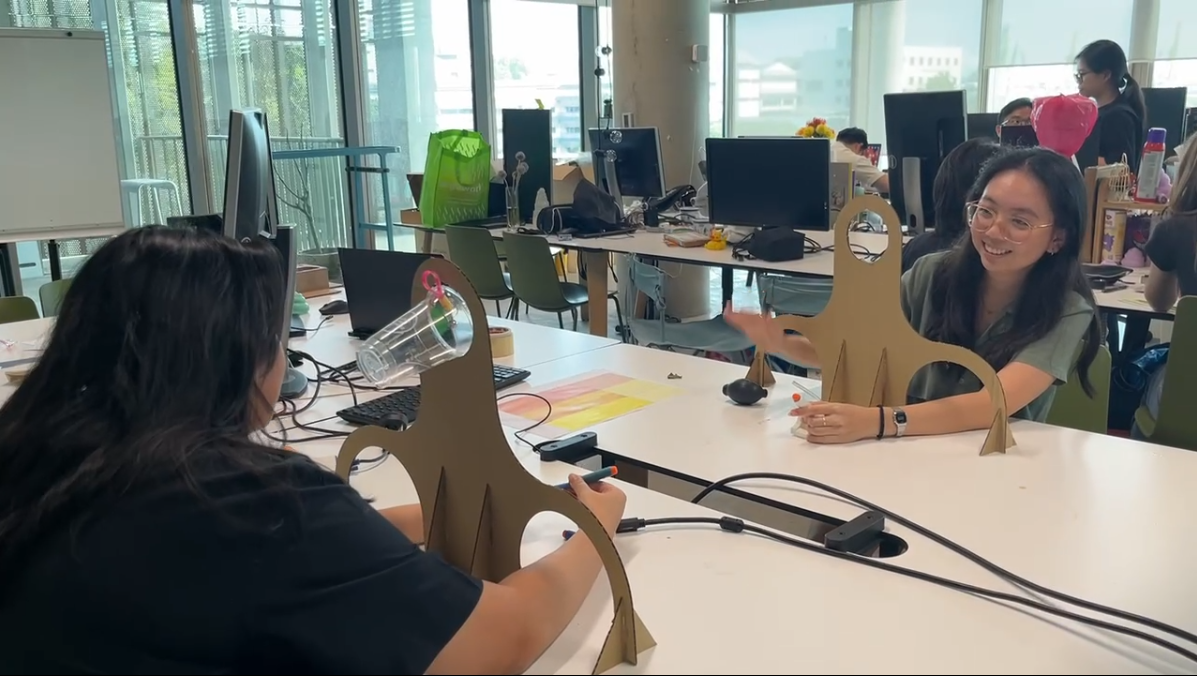
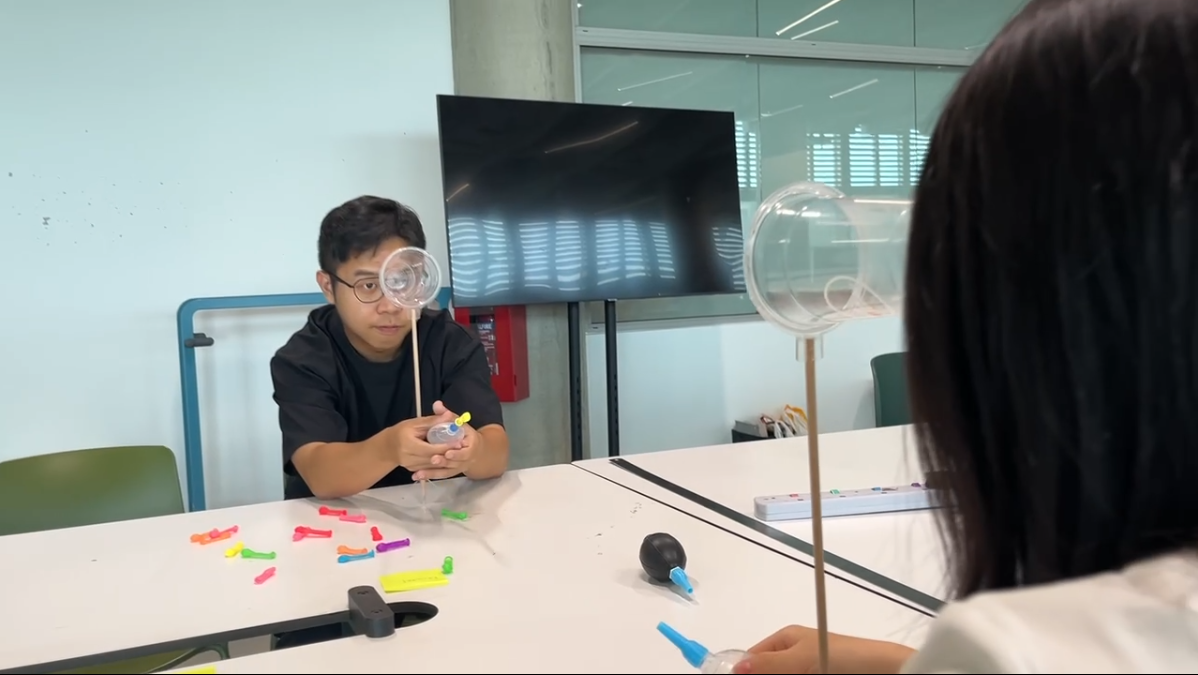
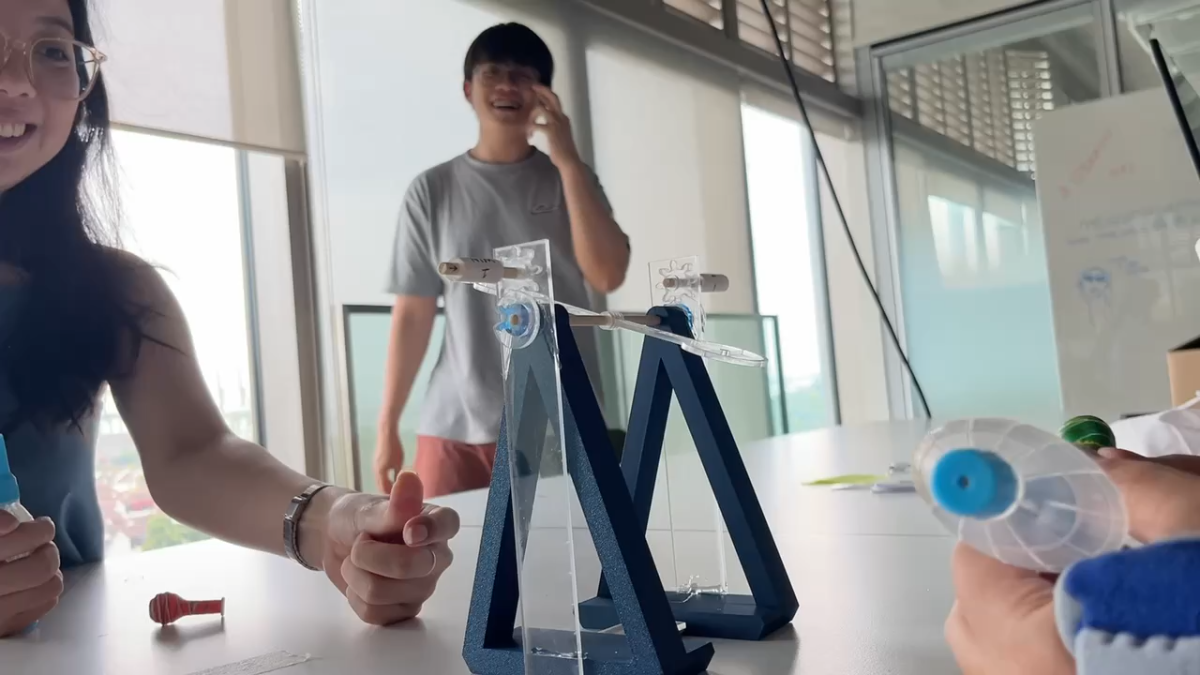
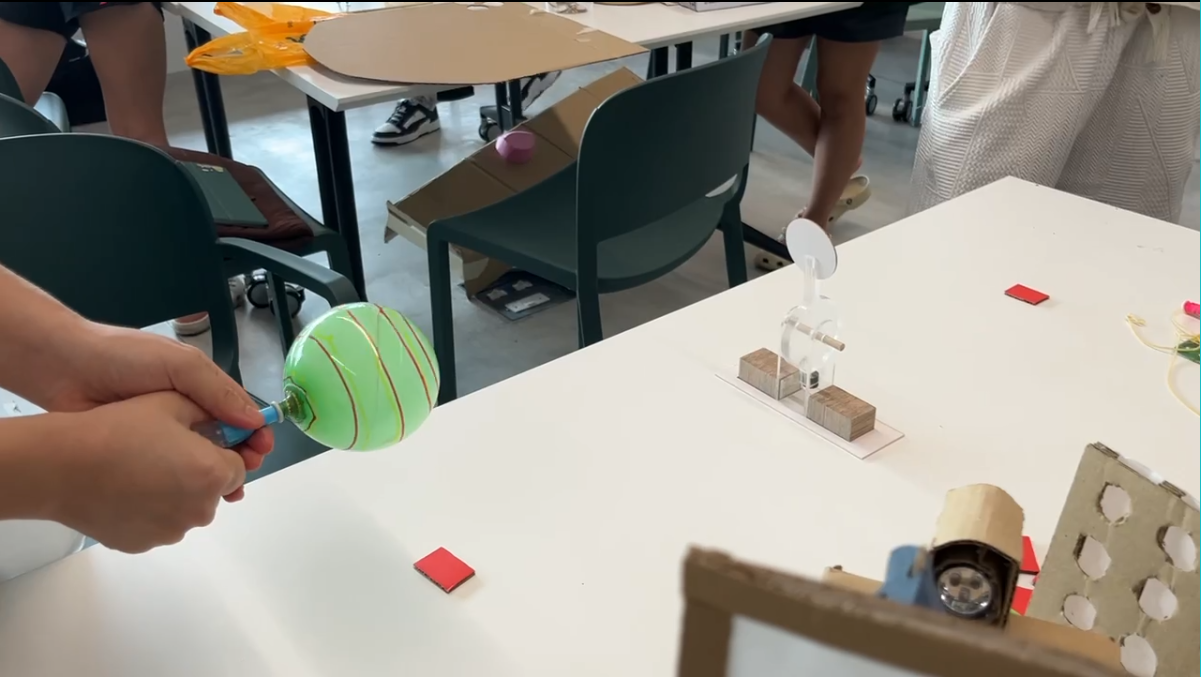
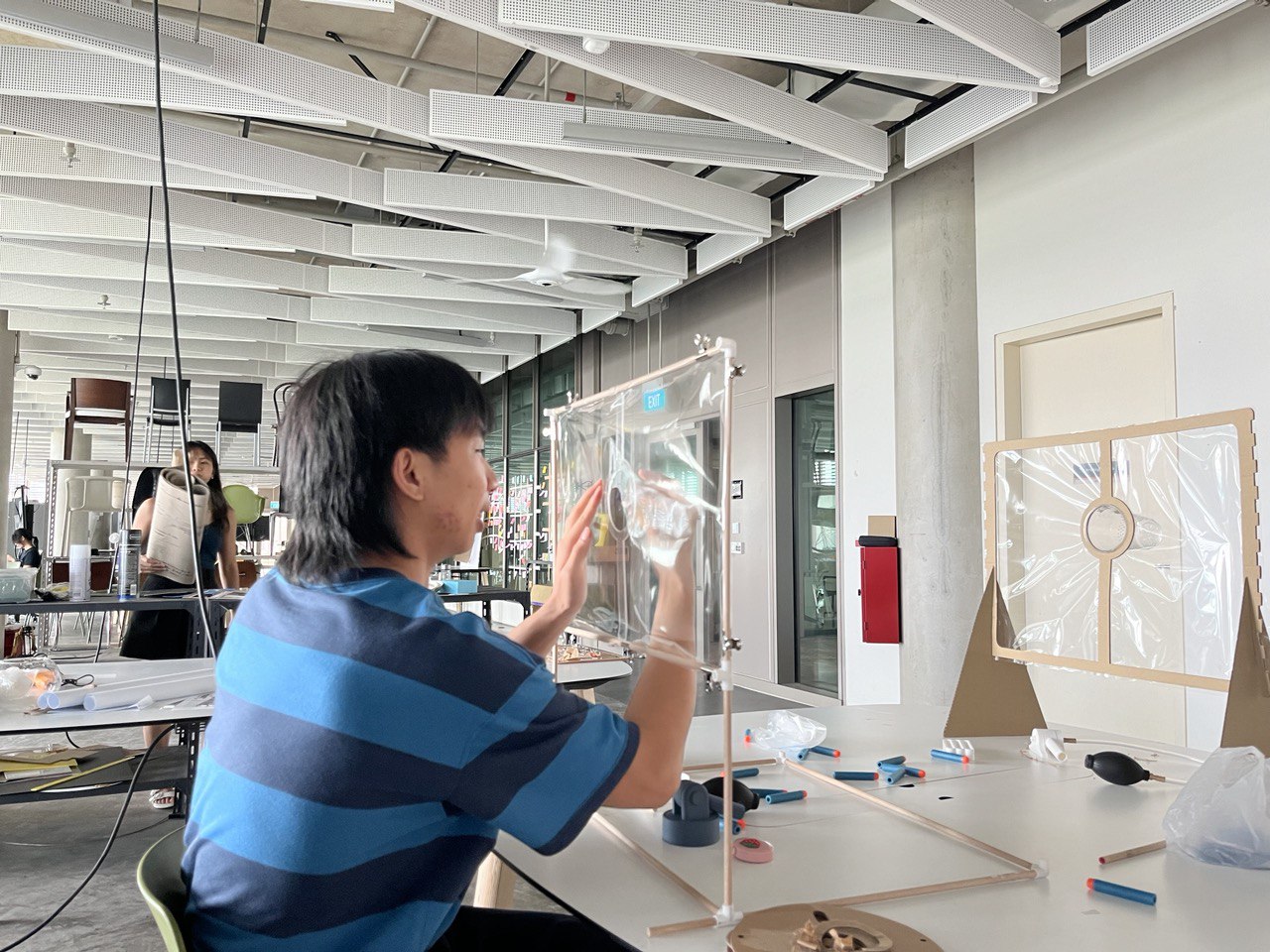
"The thrill is not just in the shot. It is also in the reaction."
Designing around the reaction produced something more interesting and more fun. The question then became how to build the game to amplify that reaction to the max.
Our idea came in 3 parts: A thoomp, a crack, and a flinch you can see.
// The Gun
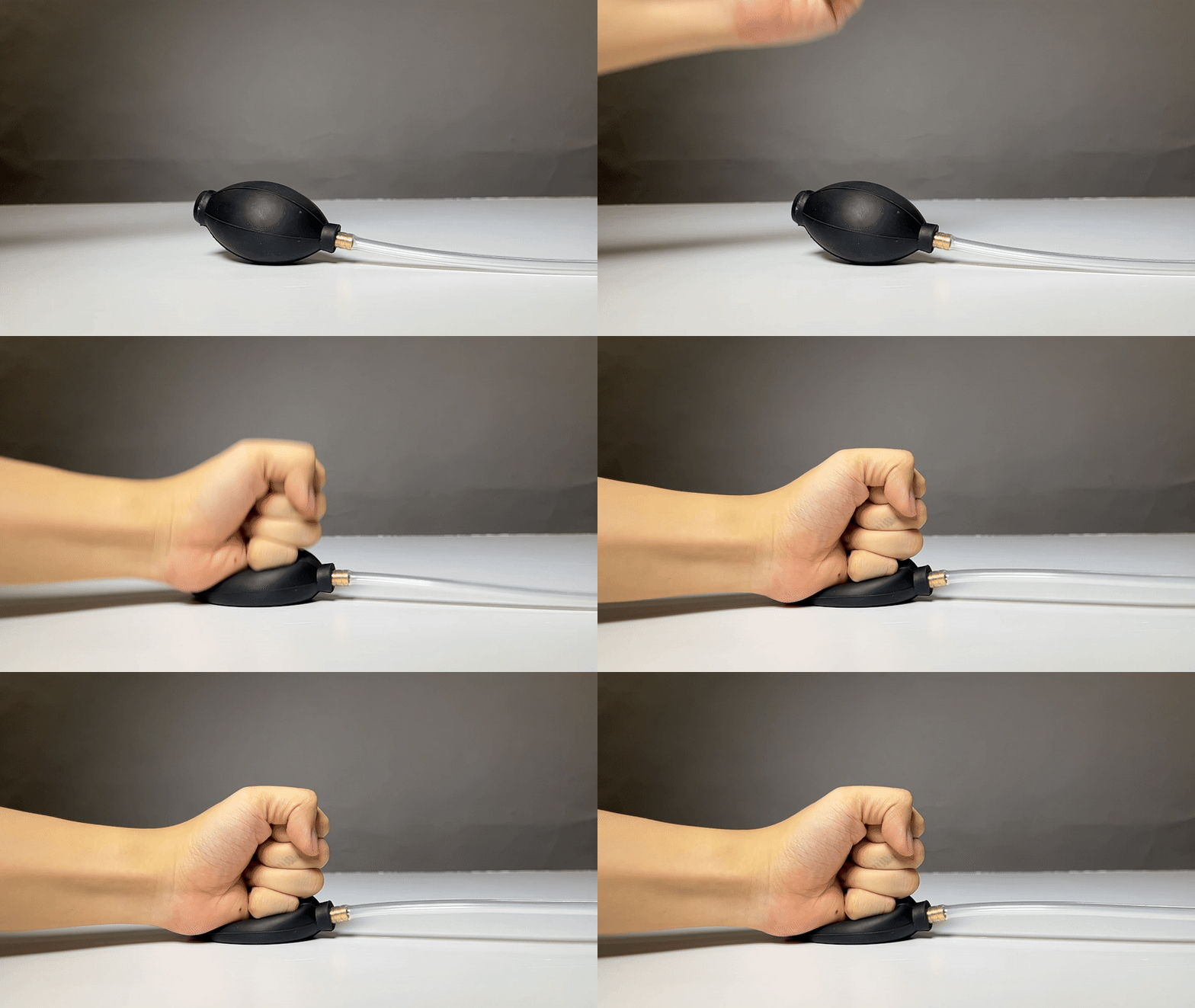
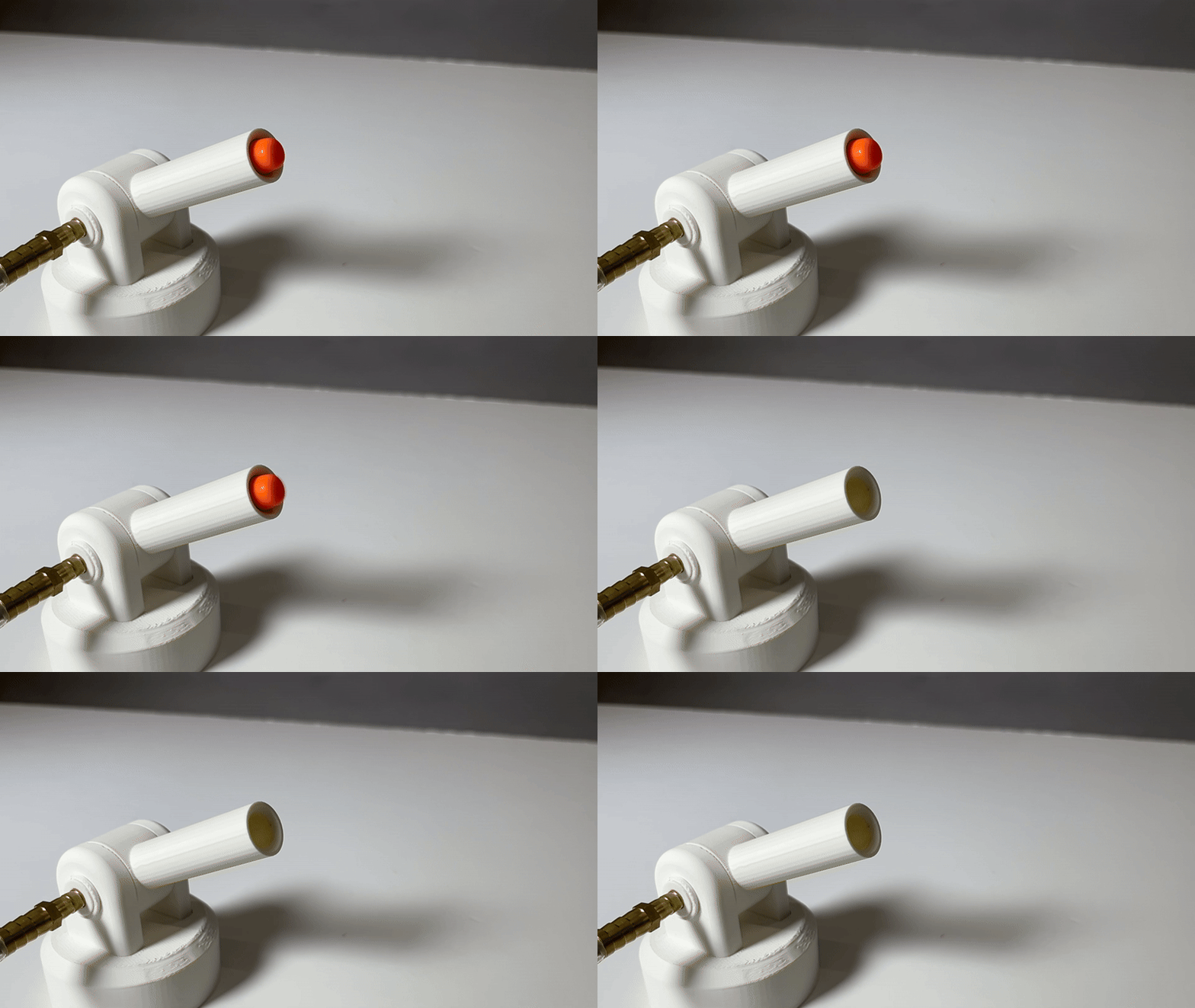
A mortar launcher sits at the heart of the system, producing a satisfying thoomp as the dart leaves the tube. The pump mechanism builds in a layer of haptics, where more force means a more powerful shot. We fixed the launcher to the table on purpose. It limits how much the player can move, and it pulls their face toward the centre of the screen, right where the action is.
// The Screen
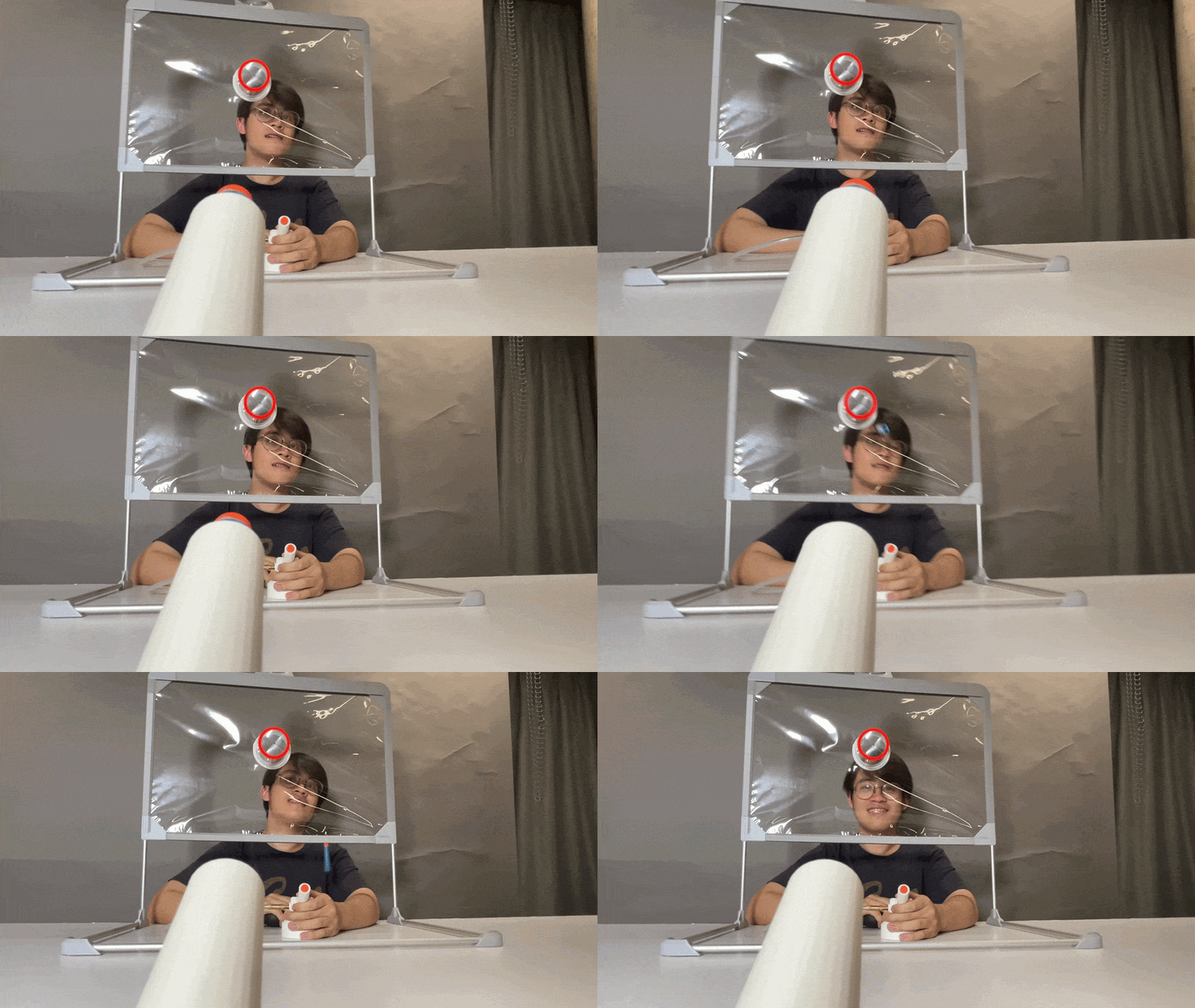
The target is a tightly stretched cellophane screen. It protects the player while delivering a sharp audible crack and a visible reaction the moment it is hit. The player who gets hit knows it. So does everyone standing nearby. What it needed next was a reason to aim.
// The Goal
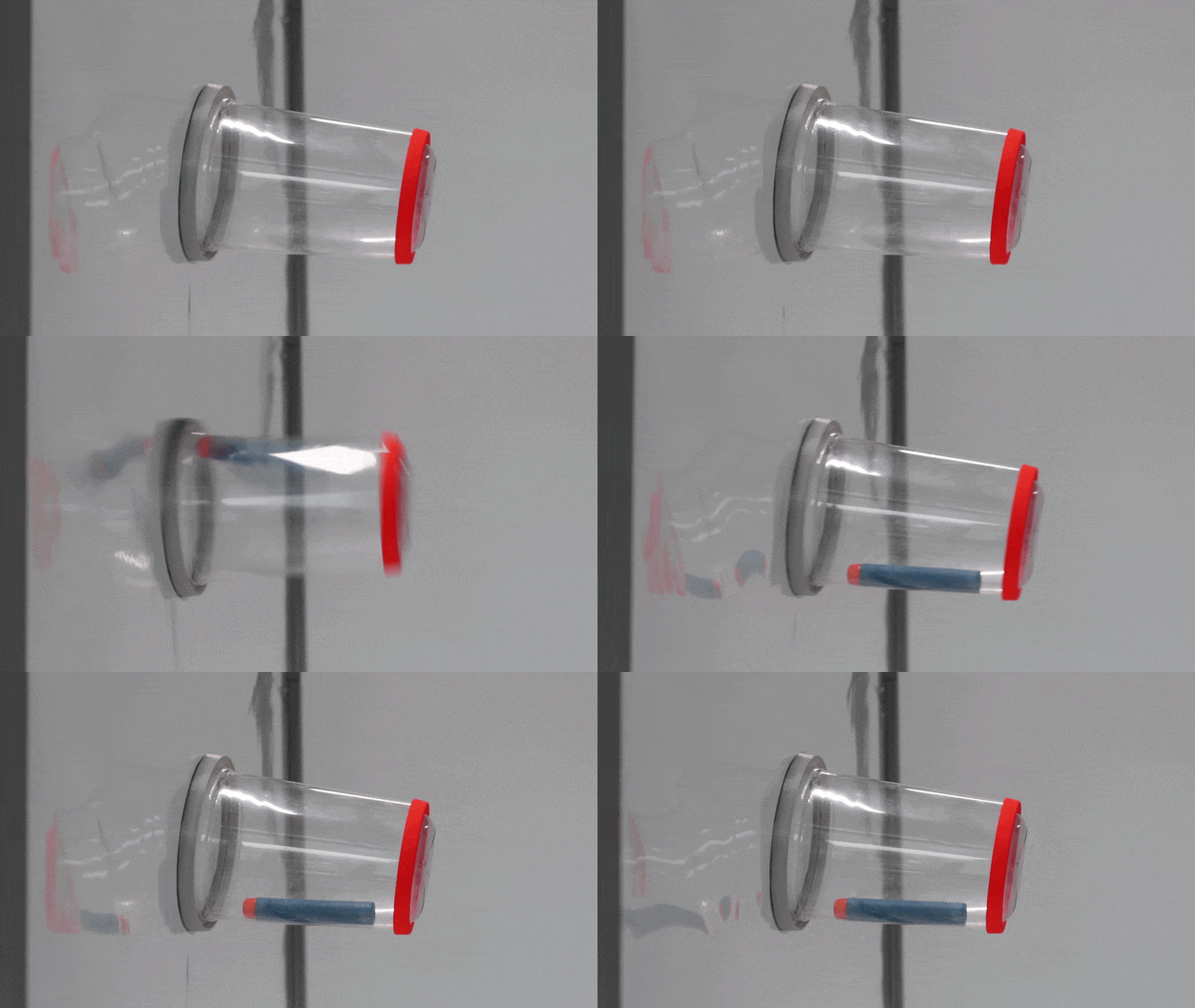
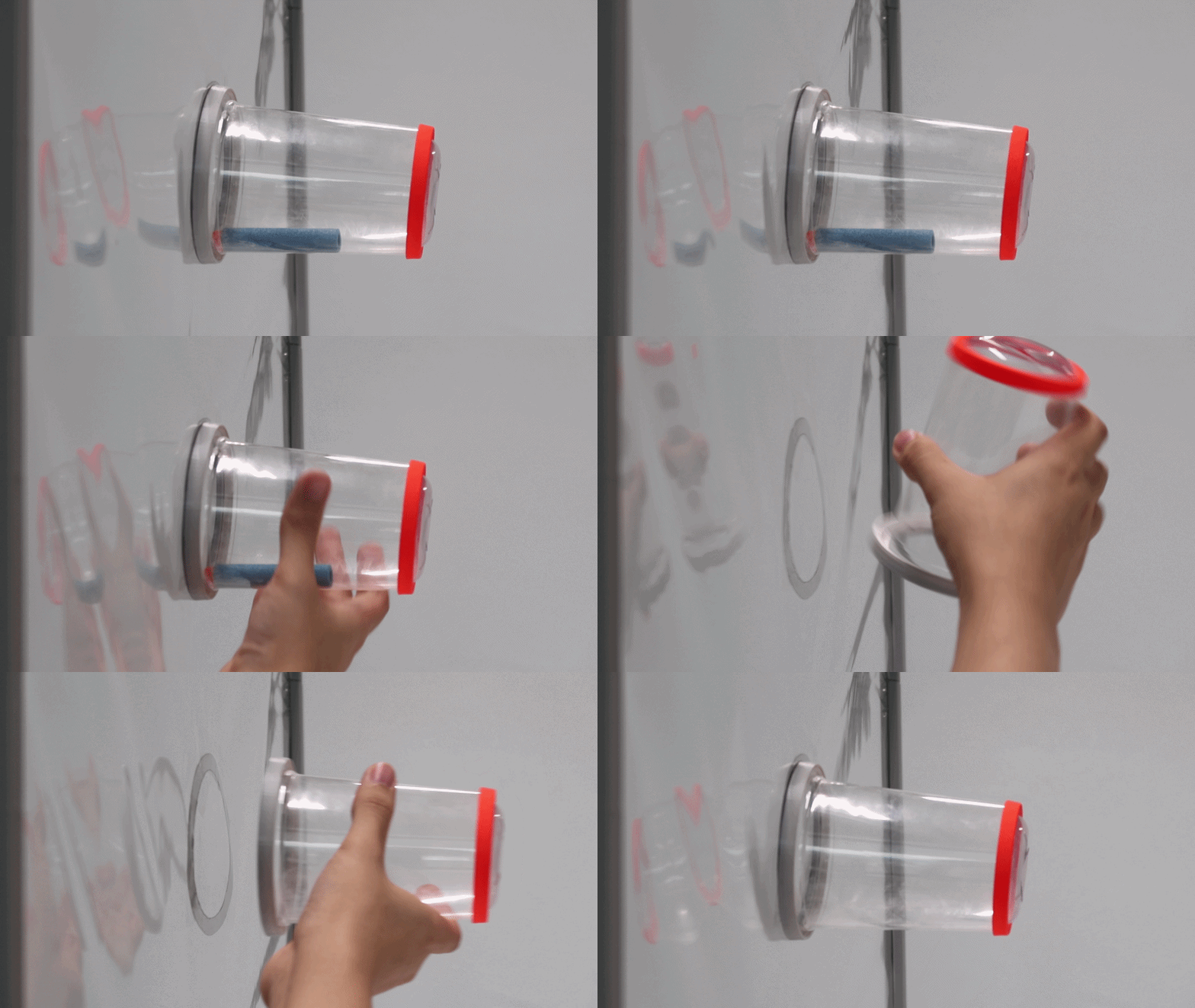
There are two targets on the screen. A large one in the centre, and a small one near the top. The centre target rewards players who want to brute force their way to a win. The smaller one rewards the few with the touch to lob a dart cleanly into it. Two ways to play, on the same screen, with easy resetting.
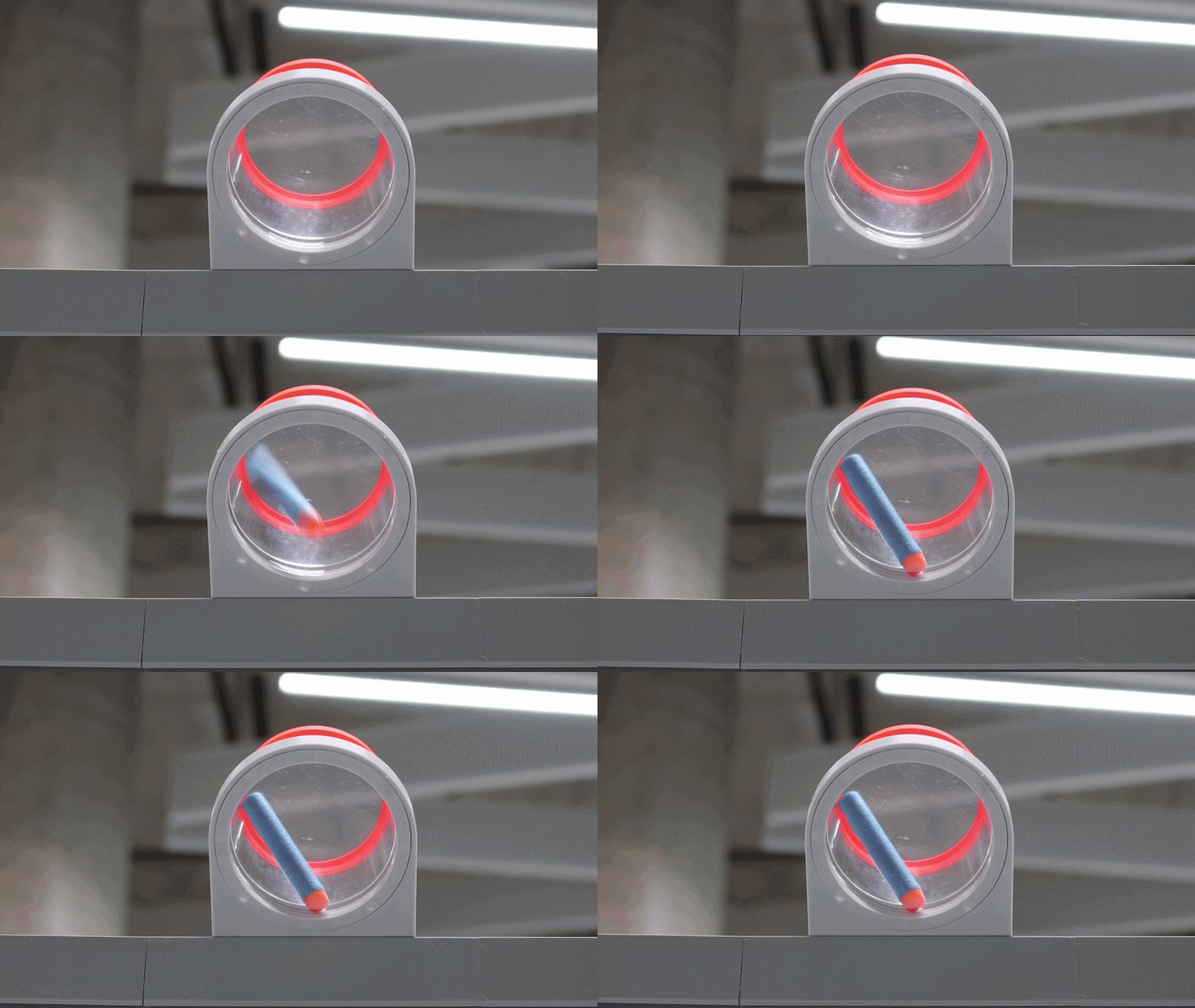
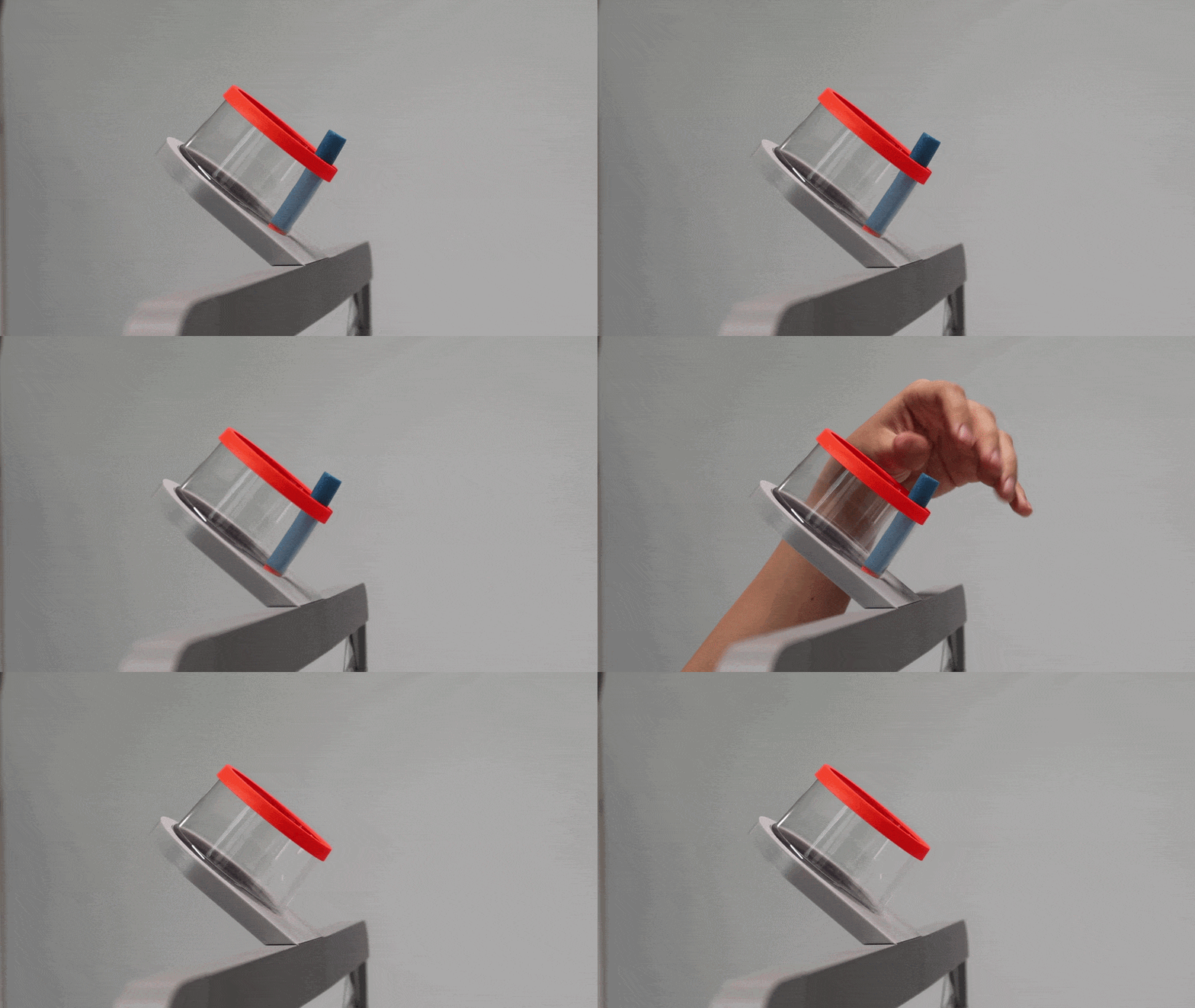
Most of it only worked on the tenth try.
Getting there required precision in places we did not expect. The barrel needed millimetre-level adjustments before the sound landed consistently from shot to shot. The cellophane went through several fastening methods before it held under impact without tearing or going slack. The targets were the worst of all, almost impossible to build in a way that survived a direct hit.
.jpg)
.jpg)
.jpg)
.jpg)
.jpg)
.jpg)
.jpg)
.jpg)
.jpg)
.jpg)
.jpg)
The smaller it got, the better it felt.
Removing features kept improving the game, which was not what we expected when we set out to add things to it.
The final version does one thing. The thoomp, the crack, the flinch. That turned out to be enough to deliver maximum fun at a relatively small scale.
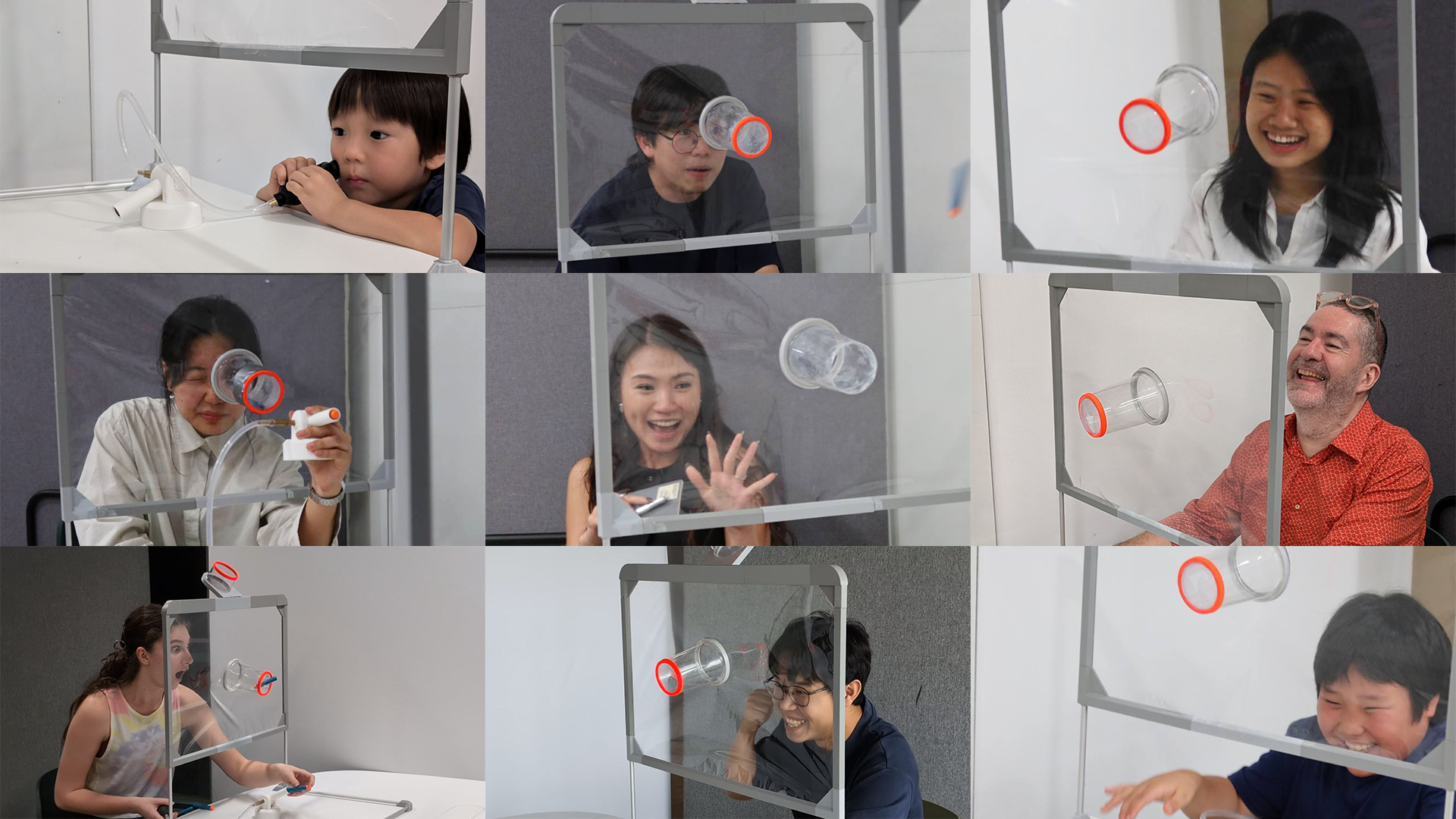
We playtested non-stop
Leon Pereira
Zoey Chan
Donn Koh
Platform Leader
Everything is Playable
Division of Industrial Design
National University of Singapore